The Oregon Trail Belonged to the Teachers Who Rewrote It, and Nonprofit Learning Can Too
Starting today, a new piece lands every Monday this fall on generosity, identity, and trust, and how we learn them together. This first one is the anchor, a look at what the community is building and where the campaigns ahead will take us.
Key takeaways
- The Oregon Trail thrived while teachers could copy, fix, and remix it, and it lost that spirit once it became an asset to be bought and sold.
- Nonprofit learning faces the same pull, and the Generosity Roundtable is growing the other way, co-created by the people who play it.
- Individuals can learn from real sessions, build a character of their own, and play along in free virtual games.
- Teams can pick up ready-made scenarios for hard conversations and join a larger team in the Roundtable Community Hive, which is free and open to everyone.
- More than sixty people have already asked to bring the game into their own communities, and group play is how the whole network learns what to build next.
- October celebrates everyone who made this possible, leading into GivingTuesday and the campaigns that follow.
A game that belonged to its players
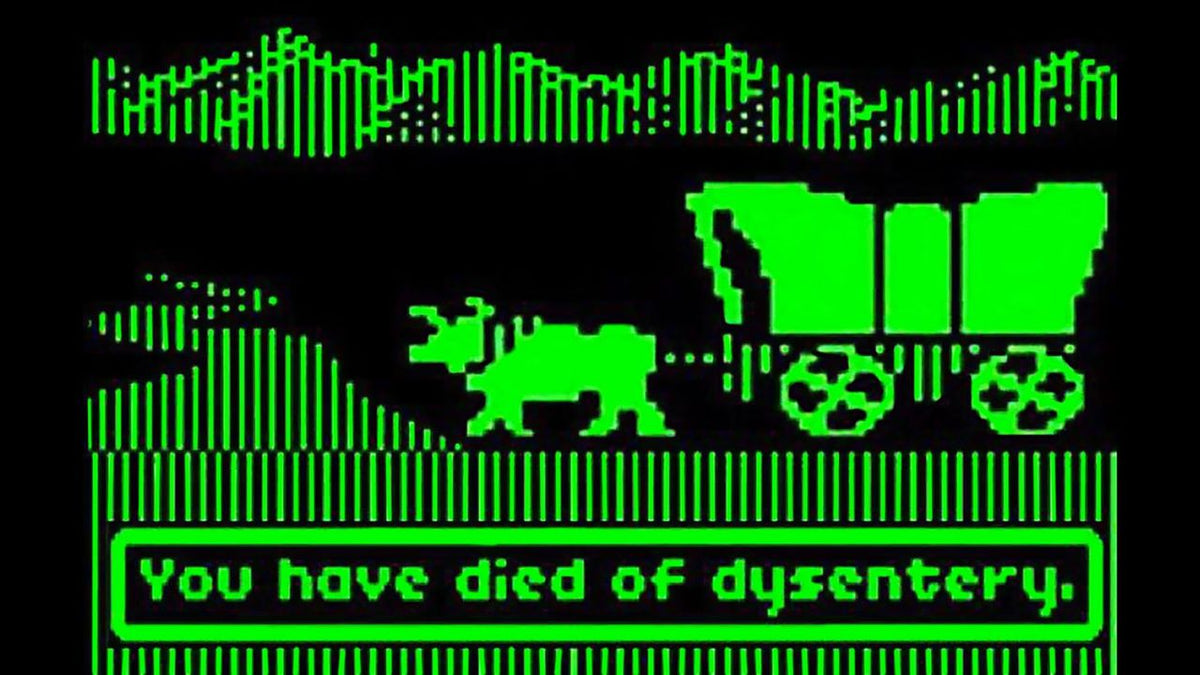
In the fall of 1971, three student teachers in Minneapolis, Don Rawitsch, Bill Heinemann, and Paul Dillenberger, turned a butcher-paper history lesson into a computer game about crossing the country by wagon. Their classroom had one terminal, so students crowded around it and argued about how hard to push the oxen and how much food to carry. The first version of The Oregon Trail was a group conversation.
What made it last was everyone who came after. When the source code appeared in Creative Computing magazine in 1978, teachers across the country typed it in, fixed its bugs, and rewrote it to include their own local history. A public consortium in Minnesota shared it with schools at little or no cost. For a stretch of years, the people who taught with the game were also the people who shaped it.
Then it became an asset. The consortium was spun off and sold, resold in a software rollup, bundled into discount bins, and finally folded into a toy company's acquisition that collapsed within months. The Oregon Trail survived as a brand. The commons of teachers building it together did not.
Learning that stays in common hands
Nonprofit professional development has felt the same pull. Much of what gets called learning now arrives as a sponsored webinar, a vendor-funded guide, or an agenda shaped by who bought a booth. Some of it helps. Yet the small teams doing most of the work rarely get to shape any of it, and they almost never get to work it out together around a single table.

The Generosity Roundtable is our attempt to keep learning where it started, with the people doing the work. It grows the way The Oregon Trail once did, through Hosts who adapt it to their towns, Guardians of the Game who invent house rules we never designed, and players whose choices at the table become the material for the next game. What follows are three ways into that work, and every one of them meets in the Roundtable Community Hive, which is free, open to everyone, and where a lone development director, a board, and a statewide association all end up on the same larger team.
For individuals, learning you can pick up and play
A lot of real learning happens alone, after the day's work is done, so the path for individuals is free and built to meet people there. It starts with learning summaries drawn from real sessions, the decisions actual tables made rather than what a slide deck recommended. Two recent examples show the shape of it.
- Pennsylvania Nonprofit Leaders Agreed That Donor Trust Gets Rebuilt Between the Asks. Four tables at PANO's Collaborative Conference, working the same case, independently landed on the idea that trust gets rebuilt in the space between asks, owned by the whole organization.
-
A $500 Gift That Got Only a Receipt. Forty professionals, joined by Rachel Muir, Julia Campbell, and Lauren Laski, chose the human option over the faster one in every round, a telling choice in a sector where roughly four in five first-time donors never give again.
Characters turned out to matter more than anyone expected. Given free rein in Pennsylvania, players at every table built someone who was also on the receiving end of the organization's services, and those choices shaped everything the tables were willing to say. That's why the free Character Creator Workshop on October 20 is the best first step for anyone coming on their own.
 For teams, a scenario ready to play
The hardest part of a difficult conversation is usually starting it. So the Guardians of the Game are helping shape ready-made scenarios for the conversations teams avoid most, with boards and about AI, where the tools are best understood as a way to read and make sense of an organization's own information while the relationships stay human. A team can run one of these once and come away with more than a good meeting, because every team that plays a scenario joins every other team that has played it. Bring your team into the Roundtable Community Hive, where those conversations continue each month and your team becomes part of a much larger one.
For groups, play that belongs to the community
More than sixty people have already raised their hands to bring the Roundtable into their own communities, and that's where the network learns the most. A room of tables shows patterns no single table can, and every group session feeds what individuals and teams get to play next. Groups tend to find their way in through three doors.
- A pop-up inside something already happening. A conference, a convening, or a staff retreat can fold in a lighter session that runs in an hour.
- A local gathering. A library, a coffee shop, a community center, anywhere neighbors who care about the same cause can pull up chairs.
- A Host-led series. Hosts bring their own spin while following a shared structure, so each session becomes a certified entry in the Library of Generosity that the whole network can read and build on.
Some communities want to go further and bring many organizations in at once, together rather than seat by seat, and the energy coming out of Pennsylvania suggests how much appetite there is for that. The first large experiment happens at the Nonprofit Social Media Summit on November 17 and 18, the best place to see what this could look like for your own community or company.
October is a thank-you
Nothing here happened alone, so October belongs to the people who built it. We'll tell the story of what donors made possible, what partners like Bloomerang did to keep games free and open, and what players and Hosts created by bending the rules and inventing formats of their own. Local games and workshops lead the way to GivingTuesday, when a livestream with Tiltify and a community fair at The Connect Center, co-hosted with Ben Williams, bring the season together.
Behind that, the network is getting a learning management system to log official gameplay and share materials in a structured way. It gives people a record of learning they did by actually running a conversation, the kind of documented professional development that credentials like the CFRE ask for.
What comes next, together
The campaigns ahead will go deeper on each of these threads, and much of what they carry is still being written by the community. Authors are exploring adaptations of their books, players are testing solo formats, and Hosts are sketching expansions and variations for their own regions. None of it moves forward without the people who will play it, because the long goal is a Host in every county in the United States, and the only way to get there is together.
The Oregon Trail didn't become beloved because of the three people who wrote it. It became beloved because thousands of teachers typed it in, changed it, and made it theirs. That's the version of this work worth building, whether you come in through a character, a team scenario, or a room full of tables.
What would your community make of this game if it were yours to change?
If you want to see how all of these pieces fit together, join the livestream on October 6. We'll walk through what's coming, and bring someone with you.


