The Empty Chair is our plan for a table in every county, and it starts this GivingTuesday
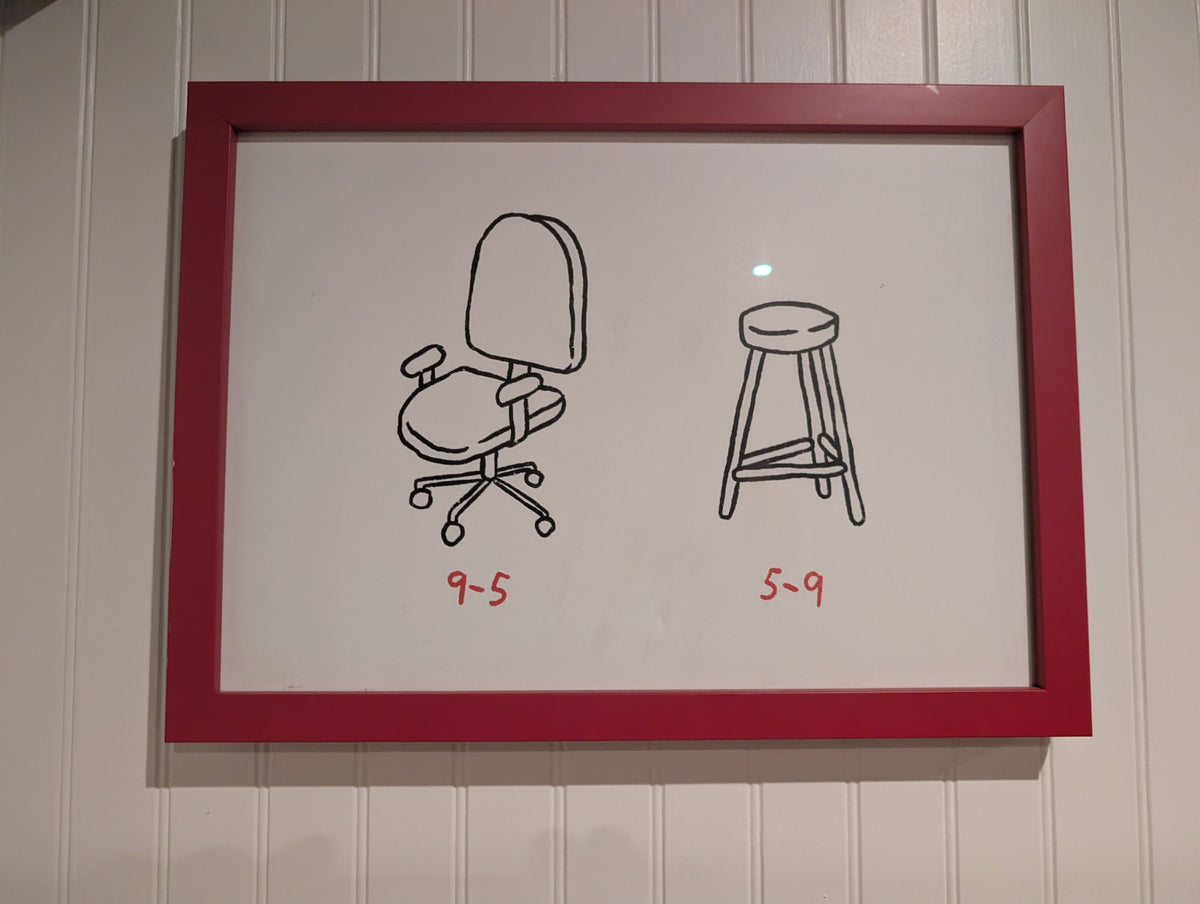
This is our signature piece for the Empty Chair, the ten-year vision we debut live in the Generosity Roundtable Direct on Tuesday, November 3 at 4 PM ET, along with a first look at Project Revolution, our preview of what's coming in 2027. Bookmark it. We'll be back Wednesday to add the Direct videos and a set of resources you can put to work right away.
Key takeaways
- The Empty Chair is the Generosity Roundtable's ten-year vision, a trained Host and an open seat in all 3,144 U.S. counties and county equivalents by 2036.
- We serve everyone who holds generous work together, and we fill a gap few funders or technology companies measure, the experience of the person in the role, with joy and confidence in under an hour.
- Everything we've built now lives in one educational gaming system, The Generosity Spectrum Network (TGSN), with ways in for individuals, teams and gatherings across about ten formats so far.
- We want the best facilitation techniques easy to find and easy to use, and as an affordable shared service the network shows funders and nonprofits where professional development dollars will do the most good.
- Any nonprofit can bring it home on its own terms, by buying it outright, getting it sponsored, or talking with us about group pricing and custom-designed games.
- Bigger impact is already on the table. We reveal our first Platinum box supporter on November 18, licensing opens in 2027, and Project Revolution gives a first look at the rest in the Direct.
- The biggest way to help this year is our GivingTuesday campaign on December 1, where every $500 places a box in a community that doesn't have one yet.
Every table we set keeps one chair open on purpose. That chair is an invitation to whoever isn't in the room yet, and over the next ten years we want one waiting in every county in the United States, with a trained Host sitting beside it.
We call it the Empty Chair. I learned the Empty Chair Rule at Knutpunkt, the Nordic gathering of live-action role-play designers, and it became one of the core rules of the Generosity Roundtable. The open seat asks every table to bring someone new in, and it promises everyone who sits down that the network is always looking for a peer for them. This piece is about what we're building around that chair, how your organization can bring it home, and why the next thirty days matter so much.
 It starts with one person
In How to Know a Person, David Brooks sums up the idea in a single line, "a person is a point of view." Each of us reads the world through everything we've lived, the people who raised us, the work we've done, the losses we carry. Generosity identity is that point of view as it shows up in how we give, whom we trust and where we feel we belong.
My year with the Aspen Institute's Alliance for Social Trust, working on how to measure trust from the bottom up, taught me that trading tactics isn't enough. The people doing this work need deeper ways of seeing the people in front of them, and the data points the same way. The Fundraising Effectiveness Project, which I chair through the end of this year, estimates that dollars raised grew 4.3 percent in the first quarter of 2026 while the number of donors fell another 0.8 percent. What that means is more of the work now rests on fewer people, and that tells us where the opportunity is. Every person who stepped away is someone a neighbor can invite back, and every open chair is a place to start.
Fundraisers show up first in this story because they're the people we have the most concrete data on. The Roundtable is for everyone who holds generous work together, executive directors and board members, finance and program staff, volunteers and neighbors. Aspen and FEP have also taught me that the absence of information can be just as telling. We track dollars and donors down to the decimal, yet almost nobody measures what it feels like to be the person in the role, the fundraiser keeping relationships warm or the nonprofit leader keeping momentum alive. I've had too many conversations with funders and technology companies that never stopped to think about that experience at all. That's the gap we're filling, and we fill it with joy, excitement and confidence in under an hour.
Why we built a third space
I've worked at nearly every stage of a nonprofit's life, from a day labor agency with no infrastructure at all to nearly fifteen years inside a software company where I worked directly with more than 800 nonprofits to help them design magical generosity experiences. Every stage came with loneliness, uncertainty and fear. With development directors so often cited as staying about 18 months in a role, many people in our sector live through one stage alone and never see the rest of the curve. Many of the places we go to learn are shaped, more than we admit, by a profit motive. An executive at a company I used to work for once asked me why we'd market generosity when no one was talking about it. I've been answering that question ever since.
The answer took shape at NYCON's Camp Finance this October, when Art Taylor, president and CEO of the Association of Fundraising Professionals, drew every decision as a spectrum and made me the human marker standing in the middle. The room stopped arguing yes or no and started talking about where, and why. Binary thinking sorts people into sides. A spectrum gives them somewhere to stand together and disagree by degrees, and that's the third space the Generosity Roundtable creates, a place apart from work and home where people practice hard conversations before those conversations count.

One educational gaming system, The Generosity Spectrum Network
Until now the pieces have lived in a lot of places, from the Generosity Roundtable and the Library of Generosity to the Magic Binder, the Generosity Games, the Hive and the monthly Almanac. Starting this week they all live under one name, The Generosity Spectrum Network, or TGSN. It’s an educational gaming system and a peer learning community, where a gaming community meets a community research project. It brings together community researchers and anyone interested in generosity, identity and trust, all exploring those ideas in creative ways and having fun doing it, because that’s our number one rule.

The Generosity Roundtable is the flagship game inside TGSN. Fifty-five cards bring ten Generosity Archetypes to the table, each one pulling between two good instincts, and a small group takes on characters to work a real situation together. It runs on paper, so it never needs an update or a login, and it works as well with three people at a kitchen table as it does with ten in a conference room. Our workshops have shown us how fast it takes hold. People get comfortable with the format quickly, and in as little as 20 minutes they're locked in, so a full session fits comfortably in under an hour. Hundreds of people have played it, our sessions consistently rate nine or better out of ten, and tables in places like West Virginia and St. Louis have run it without me in the room.
What every Host gets
- The Generosity Roundtable, with 55 cards across ten Generosity Archetypes, the Host Manual and character sheets.
- A lifelong license, paid once, with no subscription and no renewal.
- Every session in the Library of Generosity, unlocked at no extra cost.
- A public wiki and learning resources that stay free forever for your whole organization.
- Monthly live games and facilitation calls, so you never host alone.
- A seat in the Host Network, with the Guardians of the Game as advisors and the option to test new kits like the Magic Binder.
Three ways to pull up a chair
Inside TGSN, the work comes in three levels, each paired with an idea from Brooks. Individuals learn to see a person. Teams learn to accompany each other through a decision. Gatherings practice presence, the simple act of showing up. Across all three, we've developed about ten formats so far, and the people playing keep inventing more.

For individuals, learning to see a person
The Library of Generosity sits at the center of our learning loop. Every table sends back its game sheets, its decisions and the characters people built, and those become sessions and campaigns the next table can pick up and play, so what one table figures out can become the opening move for a board three states away. The Library locks in Standard Play, so a table in Cohoes and a table in Chicago start from the same rules. Yet we don't limit anyone to it. People keep creating formats outside Standard Play, and the best of them come back into the Library for the next table to try. Around it we're growing a skill tree, with branches for the conversations the sector keeps needing to have, sorted into communications, engagement and operations, and paced by what the community tells us it needs. We use AI as a sensemaking tool to read across what comes back, and people do the listening, the judging and the making.
The heart of it all is the character sheet. When Erica Waasdorp, who has spent her career helping nonprofits grow monthly giving, was asked to build a character of herself, she sent it back in three days. She circled the Connector, the person people come to because they know who's involved, and marked herself all the way at Devoted. That's generosity identity, and it belongs to everyone. Individuals have formats of their own, from our Character Creator Workshop, which we're turning into an on-demand course in the Library, to one-on-one Hive Chats where you bring your character to meet someone new, to playing the Magic Binder's scenario solo as a journaling game. Anyone can start free by building a character, printing the monthly Generosity Almanac, and joining the Generosity Roundtable Hive we run with The Nonprofit Hive on the first Tuesday of every month.
For teams, walking a decision together
Brooks writes about accompaniment, the practice of walking alongside someone while they work something out for themselves. For teams, that's the Magic Binder, our official developer's kit, a yellow binder with everything one table of up to ten people needs to run a session, printed and ready, no internet required. The first edition carries a scenario adapted from Cherian Koshy's keynote on the neuroscience behind generosity at the Nonprofit Social Media Summit, and any Host can opt into testing it.
Here's what accompaniment looks like at real tables. At Camp Finance, finance leaders worked Agloe Family Services, a composite nonprofit whose one fundraiser was stretched thin, and decided to give that fundraiser teammates by naming three more people who could thank a donor. Tasha Van Vlack of The Nonprofit Hive, who co-led our Character Creator Workshop, asked the question underneath it all. "Are we leaving room for people to be devoted to us in a way that doesn't match the contribution we were hoping for?" Teams that practice together start leaving that room.
A team can also be a whole chapter. On Thursday, November 12, AFP DC opens the Generosity Games at its National Philanthropy Day happy hour with a light round of the Roundtable, from 5:30 to 7:30 PM ET at metrobar, 640 Rhode Island Ave NE in Washington, with thanks to Amplifi. No experience is needed, and you can RSVP through AFP DC. A light round is one of the easiest ways into the game, and it gives a room full of fundraisers from different organizations a feel for working one decision together before anyone brings it home to their own staff.
 Teams play in more than one way. Some run Standard Play, our three-round game, some run a Magic Binder workshop at a conference, and some start with a light round like the one in DC. We've also been experimenting with LEGO® Serious Play® at events like the Bridge Conference, and we can't wait to work with networks like the GivingTuesday Communities to adapt it into formats its members would feel comfortable running, or training others to run. Why should anyone gatekeep the best facilitation techniques we have? They should be easy to find, easy to understand and ready for anyone who wants a better meeting.
For gatherings, practicing presence
Presence is about showing up, and the Generosity Games are a practice field for it. For nine days, November 12 through 20, Hosts everywhere run their own tables on the same core rules. The Games open in Washington on November 12. On November 18, during Julia Campbell's free, virtual Nonprofit Social Media Summit, we go live from the Capital Region in Upstate New York, at 6 PM ET to spotlight the tables running that week, share more about December 1 and GivingTuesday's Generosity Week, and reveal our first Platinum box supporter. A kitchen table of three counts, so does a conference room, and so does one person with a journal.
Gatherings have grown formats of their own as well, from Generosity Roundtable Bingo, which replaced trivia as the warm-up at our Independent Sector National Summit session with Rachel D'Souza and Lisa Greer, to strategic planning discussions at The Connect Center, where I'm putting theory to practice alongside Ben Williams, Director of The Connect Center for Youth as we chart out what a new way of collaboration can look like between neighbors, nonprofits, and businesses.
Better meetings, closer to home
Underneath all of these formats is a problem everyone in our sector recognizes. Most meetings are bad, and everyone sitting in them knows it. The facilitation techniques that fix them tend to live behind conference badges and consulting fees. The software company I used to work for spent tens of thousands of dollars sending me to conferences and summits, and I learned something at every one of them. What that means is the best learning in our sector too often goes to whoever has a travel budget, and the three-person shop down the road rarely gets the invitation.
It's also exhausting to try to be everywhere at once, so next year I'm staying locally rooted and traveling less, and I mean that as good news. I'd rather teach these techniques through the Magic Binder, through gatherings close to home and through the Hive, and learn alongside people like Ben in Cohoes while a network of Hosts and Gatherers, the community partners who bring Hosts together, find their own way into the game.
The research suggests the problem runs deeper than one person's travel schedule. Nonprofits spend about two percent of their budgets on professional development, and less than one percent of foundation giving went to leadership development between 1992 and 2011. Yet adults mostly learn by doing. The 70-20-10 model that Bridgespan recommends holds that about 70 percent of growth comes from experience on the job and 20 percent from coaching and mentoring, with formal training a distant third at 10 percent, and the conference seat and the certificate mostly live in that last 10 percent. Flexible funding doesn't close the gap on its own either. The Haas, Jr. Fund found that executive directors are often reluctant to spend unrestricted dollars on leadership, because urgent program needs win and a selfless culture discourages leaders from investing in their own growth. What that means is the few dollars we do spend on people tend to land on the least effective slice of learning, and the leaders carrying the most weight rarely buy it for themselves.
That's why we built TGSN as a peer learning network, an affordable shared service that lives in the 70 and the 20. One Host seat serves a whole organization, and when a funder sponsors it, the choice an executive director might never make for themselves is already made. Across the network, it also gives all of us, funders included, a clearer view of where professional development dollars will do the most good.
That view comes from our learning loop, and each piece of it shows us something different. Standard Play games give us a snapshot of how people make decisions, since every table works a scenario through the same three rounds. The Hive keeps those conversations moving between games and tells us what to put into the Library of Generosity next. The learning summaries then show the collective trends in how people across the network approach the same problems, and those trends shape what we talk about at the next Hive, so every turn of the loop starts the next conversation a little further along.

Bring it home your way
Every nonprofit should decide for itself how the Roundtable comes through its door, so there's more than one way in.
Get it yourself. Any organization can buy a lifelong Host seat outright, $500 paid once. Host memberships are open to the public while the first run of 500 boxes lasts.
Get it sponsored. A funder, a local business or a board member can put a box in your hands. A business that sponsors one becomes the patron of that community's table.
Bring it to many. If you have several organizations or chapters, talk to us about group pricing at hello@generosityspectrum.org. AFP chapters already belong to the Host Network, and our first Platinum box is already spoken for, with a philanthropic partner using it to unlock the Roundtable for 50 organizations at once. We'll reveal who on November 18.
Make it yours. We custom design games and experiences for conferences, foundations and companies, built from the same archetypes and shaped around the conversation you need to have.

Project Revolution, a first look at 2027
In Tuesday's Direct we'll give our first major product preview, a look at what TGSN becomes in 2027. Its code name is Project Revolution, a nod to the code names Nintendo gave its consoles before launch day, like Project Reality for the Nintendo 64 and Revolution for the Wii. We'll show it there first and add the video here on Wednesday.

Here's what we can already say. In 2027 we'll open licensing, so organizations can adapt the Roundtable into programs of their own. That creates new revenue streams for nonprofits that want to bring it to their region, and for businesses that see it helping their own communities build stronger generosity identities and trust. Hosts will be able to earn through the network too, with paid facilitation, conference sessions and games of their own. It's also how this grows past me. Until we reach 500 Hosts, every certified pathway runs through me and the Guardians of the Game, our advisors, and after that the network decides together.
The ten-year vision, a table for 3,144
There are 3,144 counties and county equivalents across the 50 states and the District of Columbia, and our goal is a trained Host in every one of them by 2036. We put the floor value of training one Host well at $500. What that means is $500 sets one county's first table, and $1,572,000 sets a table across the whole country. We treat 3,144 as a floor, since larger counties will want more than one table.

We're getting there in stages, on purpose. At 150 Hosts the network is on steady footing. At 500 we hold the Community Compact, a gathering of every Host and community member to decide what comes next, and we won't make another box until we have. We're modeling the climb on the Fundraising Effectiveness Project, which started in 2006 as a light, opt-in effort and grew over two decades into a resource the whole sector leans on.
We’re growing this without private equity, bank loans or venture capital. We’d rather do it the Savannah Bananas way, a little unconventional and built around the people in the stands, so the network belongs to everyone who shows up to play. That gives us three ways to grow. Plenty of people have simply bought the game outright, and some wonderful sponsors have backed the first content from our creator programs. Yet philanthropy is where my heart has been, and one number keeps fascinating us. The average gift to this work has been $500, and what that means is the typical gift is exactly what it takes to place a box in a new community.
The biggest thing you can do this year
Here's the road from here, from the Direct on November 3 to the Generosity Games, our November 18 livestream and GivingTuesday on December 1, when we grow the network.

GivingTuesday falls on December 1, and our campaign that day is the single biggest way to make an impact with us in 2026. A gift that day reaches well past the Roundtable. It supports The Connect Center for Youth in Cohoes, New York, our fiscal sponsor and home base, and every $500 that comes to the Roundtable places a box in a community that doesn't have one yet, starting with one in every state.
Bring whatever you have, your time, your talent or your treasure. Give your time by signing up in the free Hive by November 27 for an 11 AM ET match with someone new, or by joining the Capital District Volunteer Fair at The Connect Center from 4 to 9 PM. Give your talent by hosting a table of your own during GivingTuesday's Generosity Week. Give your treasure during Generosity Roundtable Live, our 7 PM ET livestream co-hosted with Julia Campbell, with stories from local, regional and national tables.
 I'll be honest about why this feels urgent. Every time I've gotten a rejection or an insult, three other people have stepped up to take its place, bringing their time, talent and treasure with them. Momentum like that is rare, and I don't want to let it cool. The first 500 boxes are our founding run, GivingTuesday is a month away, and this is only the beginning.
Take it with you
The one-page Empty Chair learning summary holds the top takeaways, the three ways in, the ways to bring it home and the ten-year road, ready to print or pass to your board. Download the learning summary (PDF)
Frequently asked questions
What is the Empty Chair?
The Empty Chair is the Generosity Roundtable's ten-year vision and one of its core rules. Every table keeps one seat open as an invitation, and by 2036 we want a trained Host and an open chair in all 3,144 U.S. counties and county equivalents.
What is The Generosity Spectrum Network (TGSN)?
TGSN is our educational gaming system and peer learning community, where a gaming community meets a community research project. It brings together the Generosity Roundtable, the Library of Generosity, the Magic Binder, the Generosity Games, the Hive and the Generosity Almanac, and its number one rule is to have fun.
What is the Generosity Roundtable?
The Generosity Roundtable is the flagship game in The Generosity Spectrum Network. Small groups take on characters drawn from ten Generosity Archetypes and practice real decisions together before they count.
What is Project Revolution?
Project Revolution is the code name for our first major product preview, a look at what The Generosity Spectrum Network becomes in 2027. It will get a teaser in the Generosity Roundtable Direct on November 3, with a full reveal coming on December 1 during our GivingTuesday livestream with Julia Campbell.
Is the Generosity Roundtable only for fundraisers?
No. Fundraisers are the people we have the most concrete data on, since Tim's lived experience most focused on fundraisers, marketers, grant writers, volunteers, finance, and other revenue specific teams. The Roundtable serves everyone who holds generous work together, including executive directors, board members, finance and program staff, volunteers and neighbors.
How many ways are there to play the Generosity Roundtable?
About ten so far. The Library of Generosity keeps Standard Play consistent, and people keep creating new formats, including the Character Creator Workshop, one-on-one Hive Chats, solo journaling, light rounds at happy hours, Generosity Roundtable Bingo and LEGO® Serious Play®.
Why should funders invest in a peer learning network?
Foundations have historically put less than one percent of their giving toward leadership development, and most professional growth happens on the job and through coaching and mentoring. A peer learning network is an affordable shared service built for that kind of learning, and its games, Hive conversations and learning summaries show where professional development dollars will do the most good.
Can my nonprofit buy it directly?
Yes. Any organization can buy a lifelong Host seat for $500, paid once, which includes the full system, every Library of Generosity session and a seat in the Host Network.
Do you offer group pricing or custom games?
Yes. Organizations with several sites or chapters can talk to us about group pricing, and we custom design games and experiences for conferences, foundations and companies. Write to hello@generosityspectrum.org.
What is a Platinum box?
A Platinum box lets a philanthropic partner unlock the Roundtable for many organizations at once. Our first one unlocks it for 50 organizations, and we reveal that supporter on November 18.
Where does a GivingTuesday gift go?
Gifts run through our fiscal sponsor, The Connect Center for Youth in Cohoes, New York. They support the Connect Center and place Generosity Roundtable boxes in new communities, with every $500 setting one more table. We'll be outlining more about our campaign starting November 18.
Pull up a chair
I've spent a career watching good people learn alone, and I don't believe it has to stay that way. Yet a vision like this only works if the chair stays open long enough for someone to sit in it. Join our GivingTuesday campaign and help us set the next table.
Join our GivingTuesday campaign
We'll be back Wednesday with the Direct videos and resources, and every Monday after that with another story from the tables. Until then, who's missing from your table?
With thanks to Ben Williams and The Connect Center for Youth, Tasha Van Vlack and The Nonprofit Hive, Erica Waasdorp, Art Taylor and NYCON, Julia Campbell, Cherian Koshy, AFP DC, every donor and funder and sponsor of this work so far, and every Host and Guardian of the Game who keeps a chair open.


