Small Nonprofit Teams Building Infrastructure Need a Place to Practice Big Decisions
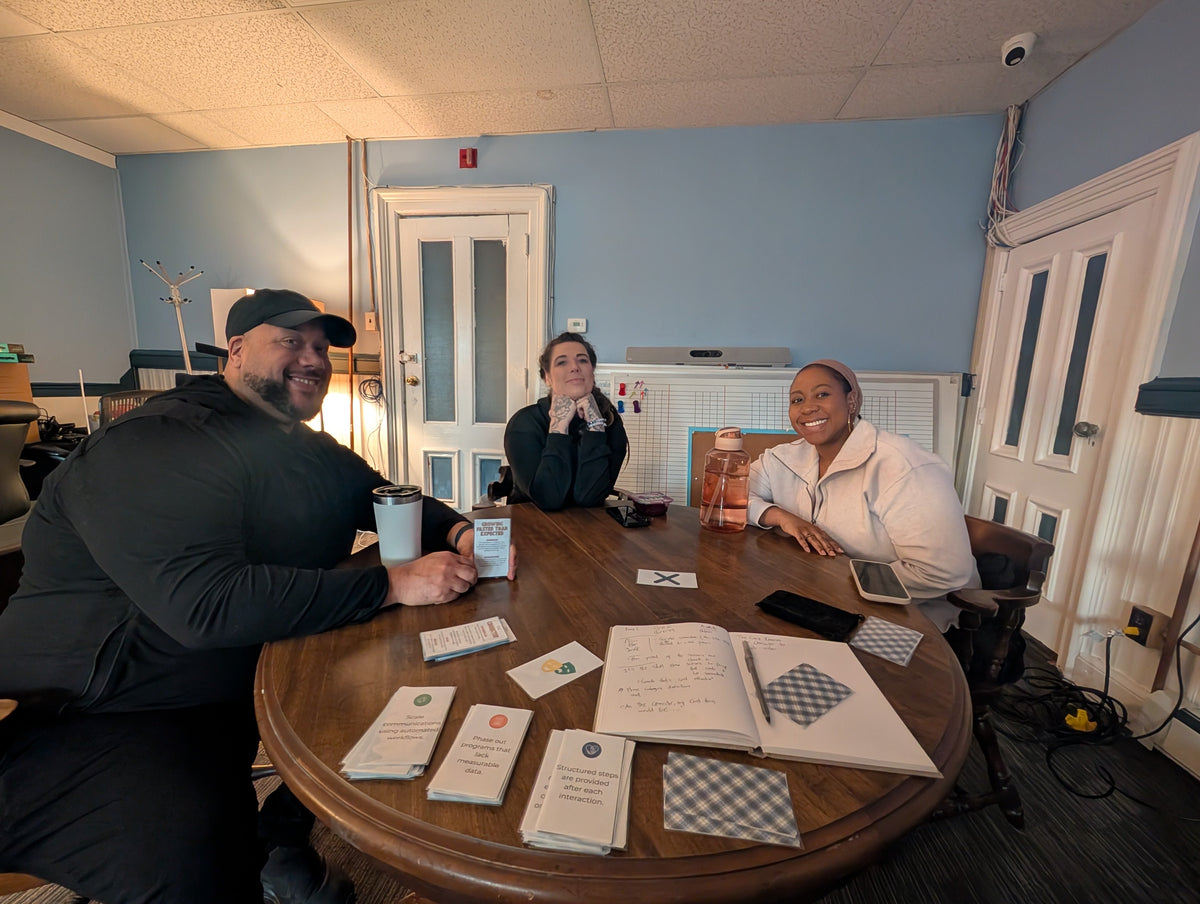
Field notes from a live Generosity Roundtable at CauseVox's Nonprofit Fundraising Summit and a session with Bloomerang on October 1, on the nonprofit lifecycle, where most small teams say they are on it, and why the decisions at that stage deserve a place to practice.
Key Takeaways
- Every nonprofit sits somewhere on a lifecycle, from start-up through adolescence, infrastructure, and maturity, and each stage needs a different kind of help.
- Fundraisers often stay in a role for about 18 months, so many people in the sector only ever experience one stage and can mistake its problems for the way all nonprofits work.
- When a Bloomerang webinar audience placed their organizations on the lifecycle, the vast majority chose infrastructure, the stage where an organization builds the systems that will carry its work.
- Nancy Bacon's Learning That Sticks explains why that stage matters so much. Engagement is motivation wrapped in a system, and small teams rarely run short on motivation.
- At CauseVox, two attendees who had never seen the Generosity Roundtable pressure-tested three infrastructure decisions for a composite organization with a single fundraiser, while the audience voted live in every round, all inside 45 minutes.
- Knowing why people are in the room, including yourself, is the fastest way to decide which system to build first.
Start by finding where you are
Before you take the next piece of advice about your fundraising, it helps to know where your organization sits on the nonprofit lifecycle. Every organization moves through recognizable stages, and help that works beautifully at one stage can miss entirely at another. When I asked a webinar audience this week to place their own organizations on the lifecycle, the vast majority said they're building infrastructure right now, which is the stage where the biggest decisions get made and where a place to practice those decisions matters most.
The version of the lifecycle I use is adapted from TCC Group. It follows an organization from start-up, through an adolescent stretch of growth, into the work of building infrastructure, and on to maturity. From there an organization either keeps renewing itself or slides toward stagnation, usually because the people at the top stop listening. The stages have little to do with age. A twenty-year-old organization can still be in its adolescence, and a three-year-old one can already be building serious infrastructure.
Knowing your stage matters even more because of how our careers tend to unfold. The figure most often cited for how long a development director stays in a role is about 18 months, and research from the Lilly Family School of Philanthropy suggests turnover runs even higher early in a career, as Bloomerang has written. What that means is many people in our sector only ever see one stage of an organization's life before they move on. It's easy to mistake that one stage's problems for the way nonprofits simply work, and to reach for advice written for an organization at a completely different point on the curve.

What each stage feels like, and what it needs
I've had the unusual luck of living every stage across a lot of organizations, so here's the curve as I've walked it. See which description sounds like your own week.
If you're doing everything yourself and nothing comes with instructions, you're likely in the start-up stage. My first nonprofit job was at a day labor agency with no infrastructure at all, where our online giving ran through Causes on Facebook and every technology guide I found was a 300-page manual. A start-up needs a first step from someone who has already taken it.
If your programs are growing and you know you need to raise money without knowing what comes first, you're probably in adolescence. I lived that stage running programming at an independent bookstore and volunteer engagement at an art studio for artists with developmental disabilities, where every priority felt like a shot in the dark. An adolescent organization needs help deciding what to do first.
If you're choosing the systems, roles, and tools that will carry your work for years, you're in infrastructure. At Reading With Pictures I finally knew enough about technology to put it to work, and I tested a community event I called the Timtacular. Infrastructure needs a way to test big decisions before they become permanent.
If professional development is built into your job and your systems mostly hold, you're in maturity. At a Catholic school I had real support around me for the first time, and the same fundraiser who had felt lost at the day labor agency raised millions of dollars. Maturity needs a habit of listening, because that's where it's easiest to stop.
Over nearly fifteen years at a nonprofit software company, I helped more than 800 organizations adopt new tools and saw every stage at once. The pattern that stayed with me showed up near the top of the curve, where mature organizations stop listening to the people around them and begin drifting toward stagnation. The way back is renewal, and it usually starts by asking the community what it sees.

Most of the room was building infrastructure
On October 1 I walked that curve with a webinar audience hosted by Bloomerang, then asked everyone to place their own organization on it. The vast majority chose infrastructure. I find that answer fascinating, because it means most of the people in that room are in the middle of the decisions that are hardest to undo, like which systems to commit to, whether to hire or outsource, what to automate, and who owns the experience a donor has after their first gift. Those decisions get made with real money and real people's jobs, usually in a long meeting where everyone defends their own corner.
It's also a stage most small teams face with very few hands. According to the National Council of Nonprofits, 97 percent of U.S. nonprofits run on budgets under $5 million, and most run on less than $50,000 a year. What that means is the typical person building a nonprofit's infrastructure is doing it as the only person in their role. Yet much of the professional development offered to them arrives as sponsored webinars and guides written for organizations with a full development team. I say that as someone who spent October 1 on two stages hosted by technology companies, and both made room for the audience to weigh in through live polls.
Knowing your stage also explains a conversation I had earlier that day. After my CauseVox session, a leader from a small team dropped into an open lounge and told me, more or less, that she didn't know what to do or where to focus. Then she walked me through a long list of solid programs her organization was already running. What she described sounded a lot like the adolescent stage, plenty of good work and no clear sense of what comes first, so I suggested she take a breath and ask why people are in the room.
Infrastructure is where motivation gets its wrapper
In the first Learning That Sticks session, Nancy Bacon described engagement as "motivation wrapped in a system." Nancy designs learning for nonprofit networks and co-leads the Nonprofit Learning Center, and her work is worth your time if you design learning for anyone. Her line gives the lifecycle its mechanism. Every stage asks for a different system, while the motivation underneath stays remarkably steady. People in small shops care plenty. The infrastructure stage is where an organization decides what to wrap around that care, and on most small teams the wrapper is still one tired person and a calendar.
The same equation runs on the donor side. In the Fundraising Effectiveness Project's Q4 2025 report, only 18.9 percent of first-time donors gave again, and the report names that jump from a first gift to a second as the sector's biggest unsolved problem. What that means is roughly four of every five people who trusted an organization with a first gift didn't come back. Those donors had motivation on the day they gave. The system that should have wrapped around it, from the thank-you to the second touch to the story that showed their gift mattered, usually ran through the same overwhelmed fundraiser.
This is why I've come to see the infrastructure stage as one of the best uses of the Generosity Roundtable. Pilots and doctors rehearse high-stakes decisions in simulation before they make them for real, and the people working on some of the most sensitive causes in the world deserve their own practice field. A game lets a team pressure-test a major decision through composite characters, where nobody has to defend their own organization and nobody's job is on the line, before the contract is signed or the hire is made.
We pressure-tested three infrastructure decisions in front of a live audience
The morning session at CauseVox's Nonprofit Fundraising Summit showed what that looks like. Two attendees who had never seen the Generosity Roundtable volunteered to join me on stage, took on characters that other players had built before, and worked a real question from the audience while everyone else voted in live polls during every round. An attendee named Brynn asked where an organization should invest if it could only pursue one donor retention initiative between now and year end, and that became the table's focus. The whole session, setup included, fit comfortably inside 45 minutes, and the chat stayed lively the entire way through.
The table played Agloe Family Services, a composite family services organization in upstate New York that we built from real sector patterns. It runs a $3.6 million budget with about 25 paid staff and exactly one full-time fundraiser handling every donor touchpoint. Transactional direct mail sheds about one in six donors a year, and engagement has plateaued. Agloe is larger than most nonprofits, yet its development office is the size of most small teams. When I asked whether that sounded familiar, one attendee answered "it's me" in the chat.
The players took on Doug Graves, an Evaluator who loves surveys and metrics and distrusts vibes, and Amy the Ambassador, a devoted digital manager who leads with stories and empathy. Both are invented characters drawn from previous tables, which was exciting to see put into practice for the first time. Doug's no-compromise was effort that feels meaningful but achieves little, while Amy's devotion to the mission was never in question. Put those two at the same table and you get Nancy's equation in human form, with one person bringing the motivation and the other asking what system will hold it.
The Ambassador brought the energy and the Evaluator asked who would carry it
Round one asked for a communications approach, pulling between short-term revenue and long-term trust. Amy pointed to low email open rates and wanted to take Agloe's new initiatives to social media, where engaged donors already follow along. Amy also pitched personal video thank-yous wired into an automation, and I parked that idea for later because Amy is the only fundraiser. Doug pressed on cost and measurement, and asked why someone who ignores email would engage on social. They landed on focusing public messaging on new initiatives, built with a graphic designer Agloe already pays for. The audience poll disagreed with them, which is half the fun of playing in front of a crowd.
Round two pulled between the current donor base and new ways to participate. Doug wondered whether to double down on major donors with an intimate event. Amy argued for inclusive philanthropy across every giving level, since donors carry relationships into their own networks and a new donor is worth little if they leave a year later. Doug worried about neglecting the largest gifts, Amy clarified that major and community donors belong in the same mix, and Doug picked the card inviting supporters to engage in a variety of ways. The audience agreed almost unanimously.
Investment started with time
Round three was operations, pulling between immediate stability and future capacity, and its cards read like an infrastructure agenda. One would outsource core operational functions to specialized vendors, another would require complete data profiles before engagement, and the third would invest heavily in administration before expanding programs. The table chose the third, then spent the round working out what that word meant. Amy read it as more fundraising staff, because one person only has so many hours and engagement won't lift on its own. Doug gave the answer plenty of small-shop board members have given. Agloe can't afford new hires, so it should use what it has, from the CRM to the executive director to the board.
I stepped in as host to offer an observation. Investment includes time, and the year-end rush is exactly when teams skip the slowdown that sets everything else up. A table we hosted in August reached the same place, insisting that any automated workflow needs a repeatable execution plan alongside it. Amy then asked whether some staff roles could shift toward fundraising, Doug agreed and added the board, and they settled on investing in administration with caveats. The audience poll matched them, with more of a split than before.
When the players stepped out of character, they reached the same conclusion from two directions. One said that on a staff of twelve with one fundraiser, all twelve are fundraisers, because anyone out in the community should be raising awareness and talking about trust. The other, who comes from both marketing communications and fundraising, said an organization like Agloe is almost certainly underusing its communications team. That's a piece of infrastructure most small teams already have, sitting one desk over.
What the session showed me is how much a team can learn by rehearsing an infrastructure decision before making it. Two people who had never seen the game worked through the trade-offs a real board member and a lone fundraiser would face, and landed on a plan a one-fundraiser shop could start on Monday. The caveats they named along the way, from cost to capacity to who does the work, are exactly the ones a team would want on the table before money moves.
Ask why people are in the room
Before choosing any tactic, know why people show up for you. When my local community foundation asked me to help with its appeal, the only data we had was financial. So we used what we knew about our town and the programs people had supported to sketch a few donor profiles. One was an Evaluator, which is the right lens for lapsed donors, someone who hasn't given in a year or two and reads your letter wondering whether this is still a good investment. Even with nothing but giving history, reading through one archetype's eyes brings the motivation back into view.
Another webinar attendee asked how one fundraiser balances major donor stewardship with everyone else. My fallback is always a core story. In that same appeal, I told the story of a meeting our board president attended, where we learned how many of our neighbors outside Schenectady rely on food assistance, which surprised a lot of people who live here. Stories like that work at every giving level because people recognize themselves in them, the idea Seth Godin captures in This Is Marketing as "people like us do things like this."
This is what the archetypes are for, at any stage and in any role. After the Bloomerang session, one attendee told us that seeing donors sorted into ten groups got them thinking about their own motivations first, including how those motivations shift over time and how one person can hold several at once. They said that if they end up working with donors, they plan to start by learning what moves each person and shaping their responses to match, so supporters feel connected and understood. That's the whole idea, coming from someone who isn't handling donors yet, and it's a way of seeing that will travel with them to whatever stage their next organization is in.
Whatever room I walk into, the archetypes help me read which kind of system the people there would benefit from. An Evaluator needs to see effort turn into results, and an Ambassador needs to belong to something visible and shared. A small team in the infrastructure stage can start with the one system that matches why its own people show up, and test it with the team before building it.

A checklist for small teams

Frequently asked questions
What is the nonprofit lifecycle?
The nonprofit lifecycle describes the stages organizations move through, from start-up through adolescence, infrastructure, and maturity, with a risk of stagnation and a path back toward renewal. Each stage needs a different kind of help, which is why advice written for a mature organization often misses a small team.
What is the infrastructure stage of the nonprofit lifecycle?
The infrastructure stage is where an organization builds the systems, roles, and tools that will carry its work, so its decisions tend to be the biggest and the hardest to reverse. Most of the attendees polled during our October 1 session with Bloomerang placed their organizations here.
What should a small nonprofit team focus on for year-end donor retention?
Start with why your current supporters show up, then choose one retention effort you can sustain with the people you already have. Since fewer than one in five first-time donors give again, according to the Fundraising Effectiveness Project, the second touch after a first gift is usually the most valuable place for a small team's time.
What is the Generosity Roundtable?
The Generosity Roundtable is an educational gaming system where nonprofit teams play composite characters built on ten Generosity Archetypes to pressure-test real decisions in about an hour. Its rules are free, and certified sessions become learning summaries in the Library of Generosity.
Which stage are you in?
Many of us spend our careers seeing one stage at a time, while the sector keeps handing every one of us the same manual. The leader in the lounge, the lone fundraiser at Agloe, and the younger version of me at the day labor agency each needed something sized to the stage we were in, whether that was a first step, a clear priority, or a safe place to try a big decision before making it. Engagement follows when motivation is wrapped in a system that fits, for donors and for the people learning alongside them. Before you commit to your next big decision, name the stage your organization is in, write down the one reason your most loyal supporters keep showing up, and check that the decision protects it.
Which stage is your organization in right now, and who is learning beside you?
This learning summary joins the Library of Generosity on The Generosity Compass, our growing record of certified Generosity Roundtable sessions, alongside our learning summary from PANO's Collaborative Conference. Thank you to Ernie and the CauseVox team, the Bloomerang team, the two attendees who stepped on stage, and everyone who voted along in both sessions. If you'd like to keep the conversation going, our free Community Hive meets on the first Tuesday of every month, starting October 6.


