Peer Learning for Nonprofits: The Gap We Need to Close, and How to Start
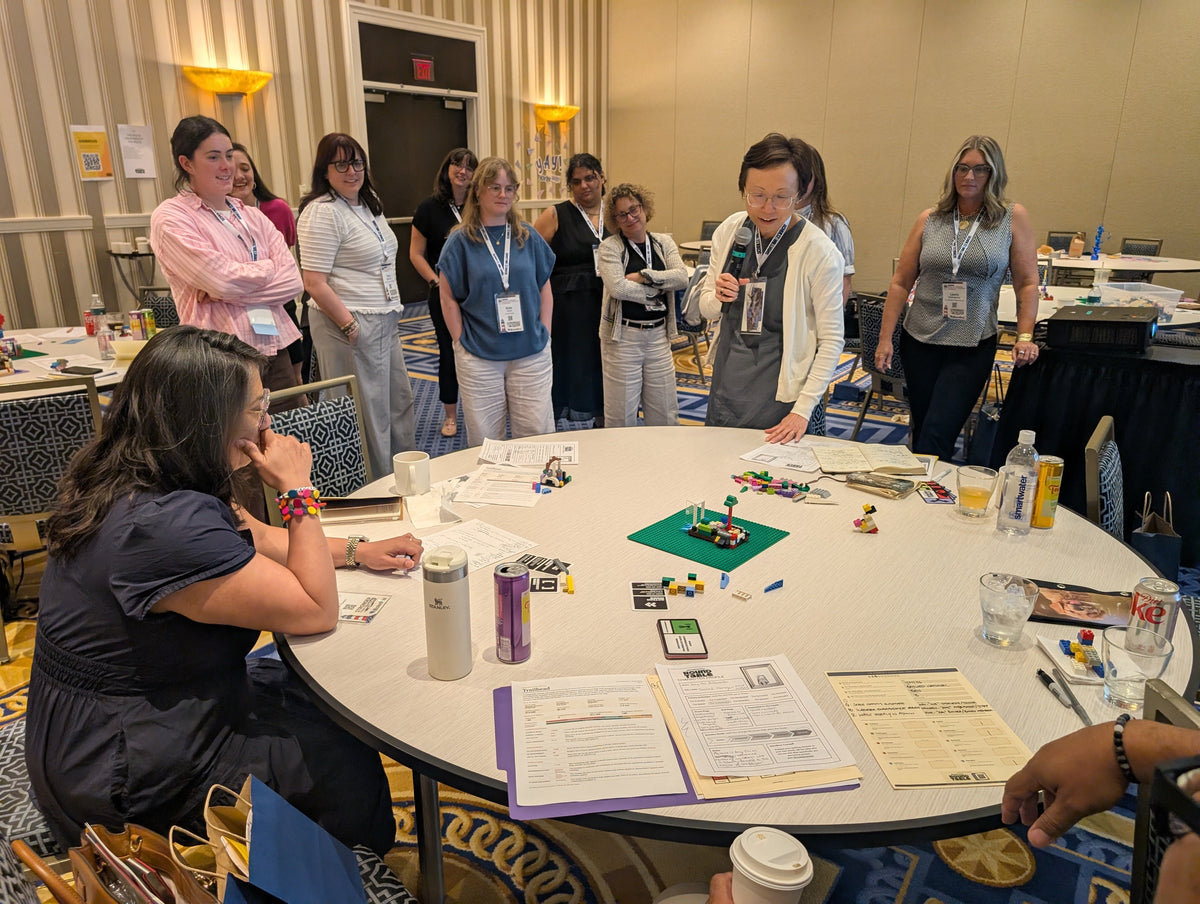
Why the sector's professional development keeps failing to stick, what peer learning and role play do differently, and concrete ways to begin with the people you already have.
The nonprofit sector does not have a good way to learn from itself, and that gap costs us more than we tend to admit. We spend real money sending people to conferences and webinars, they come back full of ideas, and a few weeks later almost nothing has changed in how the work actually gets done. The person who learned the most eventually moves on, and the learning leaves with them. What we are missing is infrastructure for peer learning, a durable way for practitioners to think through hard problems together and keep what they figure out. Building that, or joining it, deserves to be a priority, because it is one of the few investments that compounds instead of evaporating.
The math makes the gap worse. Per the National Council of Nonprofits, 59 percent of U.S. nonprofits run on less than 50,000 dollars a year and 97 percent on less than 5 million, so the professional-development budget, when it exists at all, is measured in a few hundred dollars. What that means in practice is that the expensive, episodic model reaches only a slice of the sector, and even for the organizations that can afford it, the knowledge that comes home is fragile. It lives in one person's memory until that person leaves.
Key takeaways
- Most nonprofit professional development is expensive, episodic, and individual, so it rarely changes how a team works and it disappears when people move on.
- Peer learning, where practitioners work through real decisions together, sticks far better, because people remember what they participate in.
- Role play makes hard conversations safe by letting people argue a position through a character instead of defending themselves.
- You can start with no budget. Three to five people, a real decision, a recurring hour, and a written summary is a peer learning network in its smallest working form.
- The value comes from repetition and from leaving with an artifact, which is what turns an emotional high into knowledge the group can keep.
What we actually lose
The problem is not that conferences and webinars are bad. Many are excellent, and the sector should keep showing up to them. The problem is that they are the whole diet. A conference is a burst of energy and a hallway full of good conversations, and then everyone flies home to an inbox that erases most of it by Friday. We invest heavily in convening and lightly in what happens after, so we get emotional highs without lasting learning artifacts.
Two costs follow from that. The first is that knowledge does not compound. Every organization solves the same recurring problems in isolation, from scratch, because there is no shared table where the answers accumulate. The second is turnover. In a sector where people move frequently and burn out often, learning that lives inside individuals is learning you are constantly rebuying. What that means is that a lesson your best fundraiser paid for with three years of hard experience can walk out the door in a single resignation, and the next person starts over.
Why peer learning works
The research on how adults actually learn has pointed the same direction for forty years. David Kolb's work on experiential learning framed real understanding as a cycle that runs through doing and reflecting rather than sitting and receiving, and Malcolm Knowles showed that adults learn most when the problem in front of them is genuinely their own. A lecture skips the part that matters. Working a live problem alongside people who have faced it does not.
Peer learning adds something an expert on a stage cannot. When the person across the table runs an organization your size, with your constraints, their advice arrives already translated into your reality, and the learning moves sideways between equals rather than down from a podium. My daughter Maggie defines fun as getting to enjoy something and getting to participate in it, and that turns out to describe the whole mechanism. People remember what they participate in, and they trust what they worked out for themselves in good company.

Why role play makes it safe
Peer learning has a failure mode, which is that people protect themselves. In a room where the stakes are real and a supervisor is present, most of us soften our honest read, and the conversation gets polite instead of useful. Harvard's Amy Edmondson named the missing ingredient decades ago as psychological safety, a shared belief that a team is safe for interpersonal risk-taking, and her research is blunt that learning happens where people believe they will not be punished for speaking up and stalls everywhere else.
Role play is one of the most reliable ways to manufacture that safety on purpose. The role-play scholar Sarah Lynne Bowman describes how a well-held game becomes a transformational container, a space bounded by a magic circle where people can test a hard position through a character without putting their own standing on the line. Give someone a role to argue from and the disagreement becomes about the decision rather than about them. Practitioners who try it describe the same effect, that stepping into a role and out of their daily operations puts the decision in perspective in a way a normal meeting never allows. The argument gets honest, and the person stays safe.
Ways forward you can start now
None of this requires a vendor or a budget line. It requires deciding that learning from each other is worth protecting, and then building a few simple habits around it.
Start small and make it real. The smallest unit that works is three to five people who meet on a schedule and bring an actual decision someone is facing, not a topic in the abstract. Peer learning bites when the group chews on a live problem, because that is when people stop performing and start thinking.
Give people a role to argue from, on purpose. The fastest way to make a hard conversation safe is to let people advance a position rather than defend themselves. Assign perspectives, or have people take on a character or an archetype, so the disagreement is about the choice and not about anyone in the room. This is the specific job role play does, and it is why a rehearsed argument can travel somewhere a careful meeting never will.
Protect the room. Set a couple of norms up front so it is safe to disagree, admit a mistake, or ask an obvious question. Keep the circle off the org chart, with no ranking and nothing reported upward, so people can be honest without calculating the cost.
Leave with something written. End every session with a short summary of what surfaced and one thing each person will try before the next one. That single artifact is what separates peer learning from a good vent. It turns the emotional high into something the group can return to, and it means the knowledge lives in the group rather than in one memory.
Make it recurring and nearly free. The model only compounds if it survives budget cuts and staffing changes, so keep the cost close to zero and the cadence steady. A monthly hour is worth more than an annual offsite, because the value comes from repetition rather than intensity. You do not have to build the connective tissue from scratch either. Free communities like The Nonprofit Hive already run weekly peer chats that pair you with another professional facing the same work, which is a standing, no-cost way to keep the habit alive between your own sessions.
Connect outward, not only inward. Trade sessions with organizations like yours. A development director at another food bank has probably already solved the problem you are stuck on, and the fastest way to learn it is to sit at the same table. Cross-organization peer learning is how insight moves through the sector instead of staying trapped inside single walls.

The point, and the first move
A sector that learns from itself is more durable than one that rents its education from the people selling to it, and far more durable than one that lets every hard-won lesson leave with the next resignation. Peer learning is not a nice extra on top of the real professional development. For most organizations, given the budgets involved, it is the most realistic professional development there is.
So pick one thing this week. Name three people who would show up. Choose a real decision to bring. Put an hour on the calendar and agree to leave with something written. That is a peer learning network in its smallest form, and it is the only version that has to exist before any bigger one can.
This is the gap we have been working on with the Generosity Roundtable, and much of the thinking, the archetypes, and the tools are open to explore for free if you want a structured place to begin.
Frequently asked questions
What is peer learning? Peer learning is a group of practitioners learning from each other's real experience rather than from a single expert on a stage. The learning moves sideways between people facing similar problems, which makes it easier to trust and easier to apply.
Why does peer learning work better than a webinar or a conference session? Because people remember what they participate in. Adult learning research from David Kolb onward shows that doing and reflecting beats passive reception, and a recorded session is reception with the volume up. Working a live decision with peers asks you to think, defend a choice, and see what it costs, which is where the learning lands.
What is role play in a professional setting, and does it actually help? Role play means arguing a decision through an assigned perspective or character rather than as yourself. It works because it lowers the personal risk of disagreeing, which is the exact condition Amy Edmondson's research identifies as necessary for teams to learn. People consistently report that stepping into a role puts the real decision in sharper perspective.
How do we start a peer learning group with no budget? Gather three to five people, meet for a recurring hour, bring a real decision rather than a general topic, keep the room off the org chart so it is safe to be honest, and end each session with a short written summary. That is the whole starting recipe, and it costs nothing but the time.
How is this different from a regular staff meeting or a mastermind? A staff meeting reports on work and a mastermind often centers one person's business. A peer learning circle is built to rehearse decisions and capture what the group figures out, with deliberate norms for safety and a written artifact each time, so the learning persists and compounds.
Is there an existing peer learning network for nonprofits we can join? A few are forming. The Generosity Roundtable is one, built around shared archetypes and role play, with a growing set of open, free resources you can explore before committing to anything.


