A Haunted Farmhouse Explains Why Nonprofit Case Studies and Benchmarks Feel So Convincing
This is Part 3 of the series and the last of three pieces that follow Session 0. Part 1 looked at the reviews we read before choosing software, and Part 2 went into the Facebook groups and forums where we ask each other for advice. This one closes the series with the success stories, case studies and benchmarks we lean on when we make big decisions, and three questions that help you tell what’s real.
Key takeaways
- In the age of AI, content is cheap and endless, so the thing worth having is context.
- Three questions help with any success story or chart. What do I see of myself in this? Is it telling me a story I want to believe? What is real?
- A case study is usually a company’s happiest customer on their best day, so it can be true and still leave the wrong impression.
- Good benchmarks are one of the best tools our field has for answering “what is real?”, which is why they’re worth protecting from numbers built to tell a story.
- The answers usually come from a person who has lived it, and that’s where this whole series has been pointing.
If you’ve ever sat through a software demo, you’ve seen the slide. It’s usually a story about a nonprofit a lot like yours that switched systems and saw great results, or a chart showing the company’s customers beating the sector average. Most of the time, those stories are true. Yet they’re rarely the whole story, and the parts that would actually help you decide tend to stay off the slide.
I’ve been saying this a lot lately. In the age of AI, content is everywhere and costs almost nothing to make, so the thing worth having now is context. When a success story or a chart lands in front of me, I try to ask three questions. What do I see of myself in this? Is it telling me a story I want to believe? And what is real? Two sisters in upstate New York showed how all three play out, more than 170 years ago.
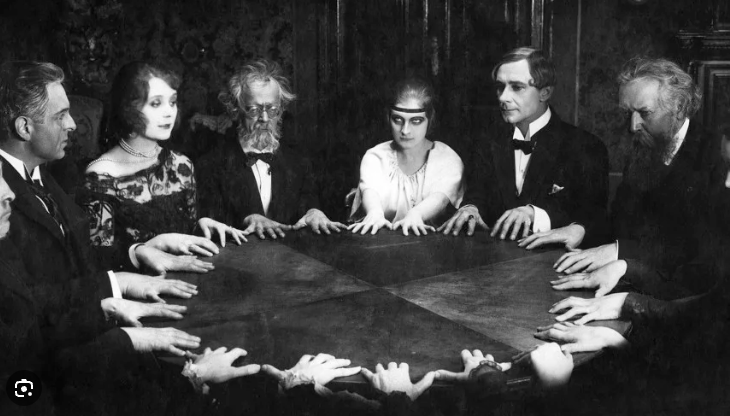
On the night of March 31, 1848, in a small farmhouse in Hydesville, New York, a few hours west of my home in the Capital Region, two sisters told their family that something was knocking on the walls. Maggie Fox was 14 and her sister Kate was 11. They called the knocker Mr. Splitfoot, an old nickname for the Devil, and when Kate snapped her fingers, the raps answered. Neighbors crowded into the bedroom to hear it for themselves, and within days the knocks had a code for yes, no and the letters of the alphabet. The spirit said it was a peddler who had been murdered in the house and buried in the cellar. No missing person by that name was ever found.
In Session 0, I told the story of Atari’s rushed E.T. cartridge, which sold on a famous name and an exciting box until people got it home and kept falling into the same pit. A case study does the job that box art did. It’s what you see before you buy, it’s made to get you to pick the thing up, and it tells you very little about what happens once you get it home.
I sit on more than one side of these stories. I spent years inside a nonprofit software company and helped more than eight hundred nonprofits invest in the platform, and today I chair the Fundraising Effectiveness Project, which publishes some of the benchmark numbers our field leans on most. So this piece comes from someone who believes in good stories and good numbers, and who knows how easily either one gets dressed up.
How a prank became a movement
The girls didn’t stay in Hydesville for long. They were sent to Rochester, where their much older sister Leah took charge of them and managed their careers. On November 14, 1849, the sisters demonstrated their rappings at Corinthian Hall in Rochester, the first demonstration of its kind held before a paying public. The newspaper publisher Horace Greeley took them under his wing, and their séances in New York drew some of the best-known writers of the day.
Within a few years, a whole movement called Spiritualism had grown up around two girls and the sounds in their bedroom. It boomed again during and after the Civil War, as more and more grieving families found comfort in it. People came to those tables carrying real loss, and the raps gave them something to hold onto.
The cushion test
The doubt showed up early. In 1851, three investigators from the University at Buffalo examined the sisters and decided the raps were coming from the girls’ own joints, in their toes, knees and ankles. Then they tried something simple. When the sisters sat with cushions under their feet, the raps stopped. That same year, a relative signed a statement saying she had helped during séances and had been shown how the sounds were made.
None of it slowed them down. The Buffalo report was the 1851 version of the three-star review from Part 1, specific, careful and read by almost nobody. The crowd kept coming because it wanted the story to be true, and a report out of Buffalo was no match for that.
The confession that didn’t stick
Forty years after Hydesville, on October 21, 1888, Maggie Fox walked onto the stage of the New York Academy of Music in front of about 2,000 people, with Kate in the audience. She showed how she cracked her toe joint to make the raps, loud enough to carry through the theater, while doctors came up from the crowd to check. The New York World printed her signed confession that day, along with how it all began, as a prank with an apple on a string bumped against the floor to spook their mother. A reporter had offered her $1,500 for the exclusive.
About a year later, broke and under pressure, Maggie took the confession back, saying she had made it for money. The sisters went back to séances to get by, never drew the old crowds again, and died in poverty within a few years, Kate in 1892 and Maggie in 1893.
Here’s the Halloween part. In 1904, a false wall in the old farmhouse cellar fell down and bones turned up behind it. A Boston paper announced that the murdered peddler had finally been found, and believers called it proof. A physician who examined the remains found random bits of bone, chicken bones among them, and judged it a practical joke. Years later a peddler’s tin box joined the story too, and the skeptic Joe Nickell, who looked into the remains and the box, concluded that at least part of the bones came from animals, a continuation of the hoax.
Even the confession couldn’t finish the story off. About a century later, psychologists who study magical thinking noted that many accounts of the Fox sisters simply leave the confession out. What that means is a good story can outlive its own correction by well over a century, as long as enough people would rather keep it.
Three questions the Fox story teaches
Every part of the Fox story lines up with one of the three questions, and so does nearly every case study you’ll read this year.
What do I see of myself in this?
The families who packed into séances heard their own loss in those raps. That’s why the story landed, and it’s why case studies work too. A good one is built so you see your own organization in it, a team about your size wrestling with a problem you know well. Seeing yourself in a story is how trust starts, so I’d never tell you to stop. Yet it’s worth asking whether what you see is really you. The nonprofit in the case study may have three times your staff, a full-time data person and a consultant on call, and its results may depend on all three.
Is this telling me a story I want to believe?
The Fox story had a manager, a stage, a paying audience and a crowd that wanted to believe. A case study for nonprofit software usually has all four. The company’s marketing team plays Leah, the stage is a webinar or slide twelve of the sales deck, and the audience is a buyer with a real budget on the line and a problem keeping them up at night. Nothing in a case study has to be false for this to work. It usually features the happiest customer, interviewed in their first good year, written up by the company and approved by both sides. The customer who struggled through the data migration, or left after two years, doesn’t get a write-up. And like the bones in the cellar, fresh proof has a way of turning up right when a story needs it.
What is real?
This is the question the Buffalo investigators asked, and they answered it with a couple of cushions. For a success story, it means talking with the people who were there and checking the claim against something bigger than one organization. That second part is what benchmarks are for.
Why I still believe in benchmarks
I want to be clear about where I stand, since I chair one of these. A good benchmark is how a whole field answers “what is real?” at once. It pools what many organizations actually did, so no single story, however moving, gets to speak for everyone. FEP pools giving data from many donor software companies and publishes how it cleans and weights that data, so you can see which organizations the averages describe. The M+R Benchmarks Study spells out its size groups, reports medians so one giant charity can’t drag the numbers around, and warns readers not to compare one year’s study to the last, since the group of participants changes. That’s what a benchmark looks like when it shows its work.
Even a good benchmark brings the first question back. In the 2026 edition of M+R’s study, “small” meant a nonprofit raising less than $500,000 a year online. In a sector where 92 percent of nonprofits run on less than $1 million a year in total, what that means is the “small” column can describe an organization far bigger than yours. The study is upfront about that, and the smart move is to find yourself in it before you measure yourself against it.
The trouble starts with numbers that only borrow a benchmark’s look. In Part 2, the trick was a frightening number posted without its context, right before someone offered the cure. Here it’s often the mirror image, a flattering number with its context missing. Crassus made his money from fear and the Fox sisters made theirs from hope, and both worked best on a crowd that skipped the questions. When a company tells you its customers raise more, keep more donors or grow faster than the sector average, ask who’s in that group. A number built from one company’s own customers describes the organizations that chose that company and stayed. The ones that struggled and left have dropped out of the average, so the comparison can look a little better every year without anyone touching it. Statisticians call this survivorship bias.
Sometimes the pushback comes from the other direction. A few years ago, a handful of consultants kept messaging me on social media about a trend they were sure they were seeing. Nonprofits, they said, were being forced into rebrands, and the rebrands were tanking donations. They kept insisting on some version of “Well, we have the data.” I didn’t argue with their point, and they may well have been right about their own clients. What I told them was that it would only take a few manipulated case studies to prove a point like that, and that one or two examples don’t make a trend.
That’s where benchmarks earn their keep. They help us check whether something a few people are seeing actually shows up across thousands of organizations. They don’t always explain why it’s happening, and that’s where the stories, the people and the three questions come back in. Meanwhile, any firm with a budget and a point of view can produce its own case studies and numbers to back the trend it wants to sell, which AI makes cheaper every month.
That’s why I think shared benchmarks are worth protecting. In Part 2, I wrote about the commons, the shared pasture that only survives when people tend it. A benchmark built from many organizations and published with its method is a commons too. When someone answers it with a private dataset nobody outside can check, it’s fair to ask for the cushion test. How was it built, who’s in it, and would it hold up if someone outside the firm took a look?
The rules already lean this way
Regulators have been circling this too. The FTC’s Endorsement Guides say that when an ad features someone with exceptional results, a line like “results not typical” doesn’t fix it. The company either needs proof those results are typical or has to say clearly what people generally get, and if customers were told ahead of time they might be featured in an ad, readers should hear that too. The 2024 rule on fake reviews I mentioned earlier in the series bans fake testimonials outright. I’m no lawyer, yet “what does the typical customer get?” is a fair question to ask of any success story, and you don’t need a law degree to ask it.
A word to the people writing case studies
Plenty of companies tell honest stories, and a good one can earn real trust. So here’s what I’d ask of friends on that side. Say how you picked the customer, and put the typical result next to the best one. Tell readers what the customer got for taking part, even if it was only a discount or a spotlight. Let a prospect call the person in the story without a salesperson on the line, and keep a customer who left on your reference list. If you publish numbers, publish who’s in them and how you got them. A story that can pass the cushion test is worth more than one that can’t, for the same reason the raps stopped drawing crowds once everyone knew about the toes.
How to give any success story the cushion test
The Buffalo investigators didn’t need a laboratory. They changed one condition and listened. You can do the same with any case study or chart that lands in your inbox, and six checks sort neatly under the three questions.
What do I see of myself in this?
-
Check whether it’s really you. Ask about the organization’s size, budget and staff, and for a benchmark, find out how it defines “small.” A result from an organization many times your size may not travel.
-
Change one condition. Ask to see the result with your data, your team size and your budget. If the raps stop once the cushions go under the feet, better to learn that before you sign than after.
Is this telling me a story I want to believe?
-
Ask who wrote it and what the customer got. A discount, a credit, a conference stage or a spot in an ad can shape what someone says, even when they mean every word.
-
Ask who left. Ask to talk with a customer who stopped using the product, and why. The ones who left are missing from the case studies and the company’s own averages alike, and they often have the most useful story.
What is real?
-
Ask for the person by name, then call them yourself. Ask for the people who did the work too, like the development director from Part 1 re-entering donor records at eleven at night, since the executive director in the pull quote may never have touched the system. Ask when it happened and whether they still use it, since the FTC expects companies to keep endorsements current.
-
Ask “out of how many?” One great result tells you very little without the rest of the group. Hold it up against a benchmark that shows its work, and when a number comes from a dataset nobody outside can check, ask to see how it was built.
Where AI fits
AI is a big part of why content is so cheap now, and it can also help you get to context, as long as you stay the one asking the questions. Give it a case study or benchmark report you already have and ask it to list every claim, the evidence behind each one, and what’s missing, like the time frame, the number of organizations or the size of the customer. Then ask it to turn those gaps into questions for that specific story. It can do the reading, yet it can’t tell you what you see of yourself in a story or call the person who lived it. That part is yours.
Where I think we are on the spectrum
Reviews were the first layer, groups were the second, and success stories are the third. Across all four pieces, the shift has been the same one. In the age of AI, content is cheap and endless, so the thing worth gathering is context, the practice-based evidence that comes from people who have actually run the thing. In Session 0, the fix for the video game crash was Nintendo’s gold seal on every approved box. In Part 2, the healthiest groups were the ones their members tended together, like Franklin’s volunteer fire company. For success stories and the numbers behind them, the fix is those three questions, asked out loud and asked together, which is the whole idea behind a table of peers testing a story before anyone takes it home.
So here is where I’d put us. The honest stories are out there, and so are honest numbers, many built by people who care a great deal about getting it right. Yet the polished stories travel faster, the manufactured numbers keep getting cheaper, and the job of reading both with care falls to all of us, buyers, companies, consultants and peers alike.
This week, before you forward the next case study to your board or drop the next chart into a budget memo, do two small things. Ask what you actually see of yourself in it. Then call one person who was in the story and ask what was real. If you don’t know who to call yet, the free Generosity Roundtable Hive we run with The Nonprofit Hive is a good place to find them.
Help write the learning summary

All four pieces in this series are out now, and I’d like the last word to belong to you. The checklist has grown one line at a time, and this week’s addition is “ask what you see of yourself in it.” So here’s the final question. What would be on a checklist for people like you? Tell me in the comments on LinkedIn or at hello@generosityspectrum.org, and your check goes into the series learning summary.
In this series
- Session 0 lays out the big picture on why cheap content is burying good learning, and what a fix looks like.
- Part 1 is the alignment piece, on reading reviews and where technology companies and nonprofit leaders stand.
- Part 2 looks at where peer advice in Facebook groups and forums helps, and where it falls short.
- Part 3 (this piece) asks three questions of the success stories, case studies and benchmarks we lean on, and shows how to tell what’s real.
Next Monday, the Compass starts something new, a series called The Empty Chair that runs all the way to AFP ICON in April 2027. This series was about who to trust, and that one is about who to invite. Until then, happy Halloween, and one last question.
Whose success story have you believed because you wanted it to be true, and who could you call to find out what really happened?
FAQ
What does it mean to move from content to context? Content is the flood of articles, webinars, case studies and AI-made guides that now cost almost nothing to produce. Context is what you gather yourself, from people who have done the work and from evidence you can check, so you can tell whether something fits your organization and whether it’s real.
What is a case study in nonprofit software sales? It’s a short story a company publishes about one customer’s results with its product, usually written by the company’s marketing team and approved by the customer. It can be accurate and still unrepresentative, since companies tend to feature their happiest customers.
How do I check whether a nonprofit case study is trustworthy? Ask three questions. What do I see of myself in this? Is it telling me a story I want to believe? What is real? Then talk with the person in the story directly, ask how many customers got similar results, and ask to speak with a customer who left.
Can I trust nonprofit benchmarks? The best ones are among the most useful tools our field has, especially for checking whether a trend is real, even when they can’t explain why it’s happening. Look for benchmarks that pool many organizations, publish how they’re built and define their size groups, like the Fundraising Effectiveness Project and the M+R Benchmarks Study. Be more careful with numbers built only from one company’s customers, or from a private dataset nobody outside can check.
What is survivorship bias? It’s what happens when you only count the ones who made it. A number built from a company’s current customers leaves out the organizations that struggled and left, so the averages look better than the full picture would.
What counts as a “small” nonprofit in benchmark reports? It depends on the study. In the 2025 M+R Benchmarks Study, “small” meant less than $500,000 a year in online revenue, while 92 percent of nonprofits run on less than $1 million a year in total. Find the size definition before you compare.
Does the FTC regulate testimonials and case studies? The FTC’s Endorsement Guides say that ads featuring exceptional results need proof those results are typical, or a clear statement of what people generally get, and that “results not typical” alone isn’t enough. Its 2024 rule also bans fake reviews and testimonials. For anything specific to your situation, talk with a lawyer.
Where can I talk with other nonprofit people about a tool I’m weighing? The free Generosity Roundtable Hive, hosted with The Nonprofit Hive, meets online every month. It’s a place to compare notes with peers who have lived with the tools you’re considering, with no sales pipeline attached.
Keep the conversation going
Success stories get more honest when people check them together. The free Generosity Roundtable Hive, hosted with Tasha Van Vlack and The Nonprofit Hive, is a peer space with no sales pipeline attached. Join the Hive and bring the case study you’d like a second opinion on.


